A wet wall under the indoor unit, drops hitting the floor, and that stale damp smell usually show up at the worst time – late at night, during office hours, or right before guests arrive. If you are dealing with aircon water leaking indoors, the problem is not just annoying. It can damage paint, stain ceilings, warp cabinets, and point to an air conditioner that is already struggling.
The good news is that indoor leaking is often repairable without replacing the whole system. The bad news is that waiting usually makes it worse. What starts as a small drip can turn into water damage, mold growth, or a complete cooling failure.
Why aircon water leaking indoors happens
Your air conditioner naturally creates condensation while cooling the room. That water is supposed to flow through the drain system and out of the property. When something interrupts that process, the water backs up and starts leaking inside instead.
In many homes and small business units, the most common cause is a clogged drain pipe. Dust, slime, and dirt build up over time, especially when servicing has been delayed. Once the line is partially blocked, the tray starts holding more water than it should. After that, it only takes a heavy cooling cycle for the overflow to begin.
A dirty air filter can also trigger leaking, even though many people do not connect the two. When airflow is restricted, the evaporator coil gets too cold and may freeze. Later, when the ice melts, the drain system gets more water than it can handle. The result looks like a leak, but the root cause is poor airflow.
Low refrigerant can create a similar chain reaction. It changes pressure inside the system, causes abnormal coil temperatures, and may lead to icing. This is where guessing can cost money. Some leaks are simple cleaning jobs. Others point to gas issues, damaged insulation, or failing components that need proper testing.
The most common causes of aircon water leaking indoors
Clogged drain pipe
This is the most frequent issue in residential split units. Dust mixes with moisture and forms sludge inside the drainage line. If the blockage is mild, you may notice occasional dripping. If it is severe, the indoor unit can leak continuously while running.
Full or cracked drain tray
The drain tray collects condensation before it exits through the pipe. Over time, trays can crack, shift out of position, or develop algae buildup. Older units are more likely to have tray problems, especially if they have not been cleaned properly for years.
Dirty filter and evaporator coil
A dirty filter reduces airflow. A dirty coil makes cooling less efficient and can contribute to ice buildup. When that ice melts, water may spill where it should not. In many cases, a leaking unit is also a unit that has been underperforming for some time.
Low refrigerant or pressure issues
If the system is low on gas, the coil can become too cold and freeze. You may notice weak airflow, poor cooling, or hissing sounds along with the leak. This is not a DIY refill situation. The system should be checked for the source of the gas loss before topping it up.
Poor installation or wrong tilt
Indoor units need proper leveling so water flows in the correct direction. If installation is off, or if the bracket has shifted, condensation may collect on the wrong side and drip into the room. This is more common than many people think, especially in rushed or low-quality installations.
What you can check before calling a technician
If the leaking is minor and the unit is still running, there are a few safe checks you can do first. Turn off the air conditioner and let it rest. This helps prevent further overflow and gives any ice on the coil time to melt.
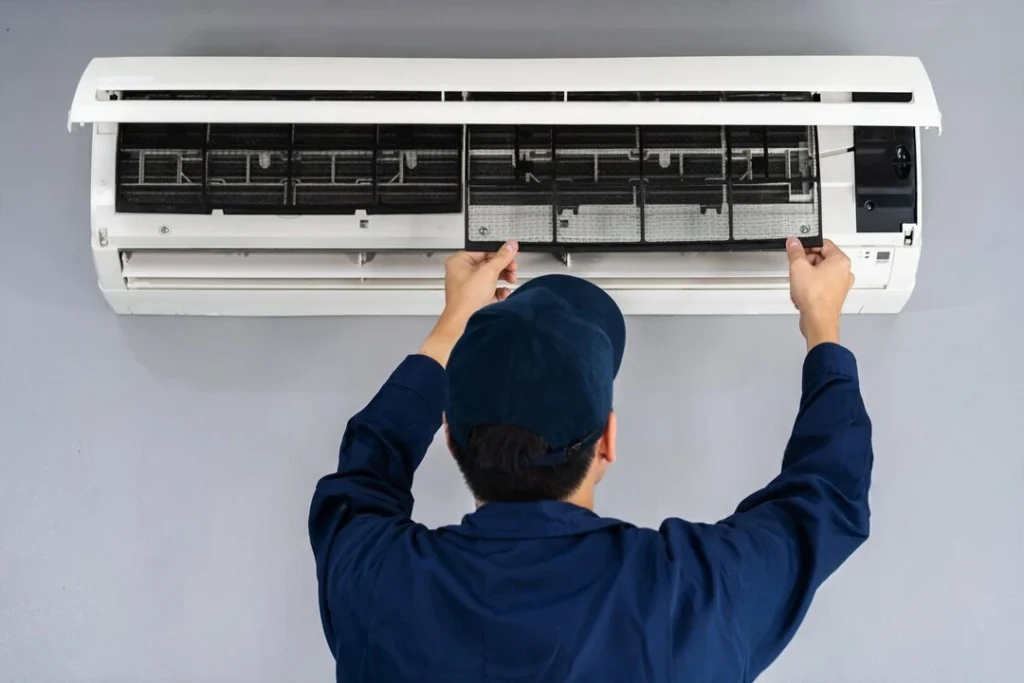
Next, inspect the air filter. If it is visibly dusty, wash it if the model allows, dry it fully, and reinstall it later. Do not put a wet filter back into the unit. While this may not solve every leak, it often removes one of the biggest contributing factors.
Then look for obvious signs around the indoor unit. Is the front panel dirty? Is water dripping from one corner only? Do you see stains on the wall from previous leaks? These clues help narrow down whether the issue is drainage, airflow, or installation-related.
If the drain pipe outlet is accessible outside, check whether water is flowing when the unit has been running. No flow can suggest a blockage. Still, be careful here. Poking random objects into the pipe can compact the clog further or damage the line.
When aircon water leaking indoors needs professional repair
Some situations need fast attention. If water is dripping near electrical points, light switches, extension cables, or office equipment, do not keep testing the unit. Switch it off and arrange service. Water and electricity are not worth gambling with.
You should also call a technician if the leak keeps returning after filter cleaning, if the cooling is weak, or if there is ice on the coil or piping. Those signs usually mean the problem goes beyond surface dirt. It may require drain clearing, pressure checks, chemical cleaning, part replacement, or correcting the installation angle.
For landlords and property managers, repeat leaking complaints are a sign to stop patching and get a full diagnosis. A tenant may report only the water, but the actual issue could include poor maintenance, hidden gas loss, or microbial buildup inside the system. Fixing the symptom alone often leads to another callback.
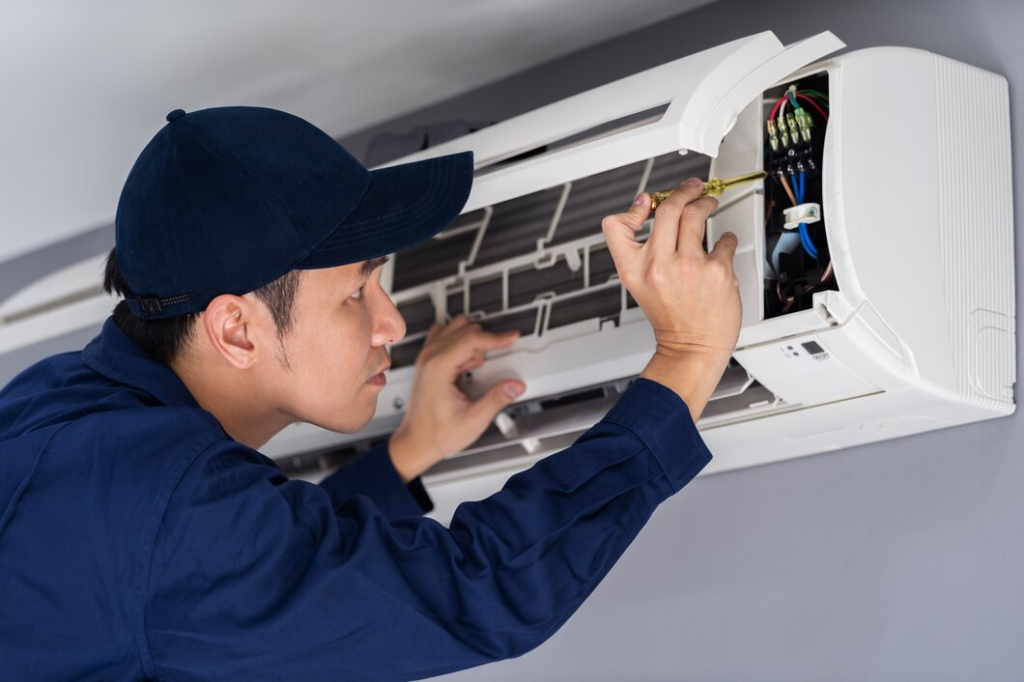
This is where a responsive local service matters. A proper technician should check the drain line, tray, coil condition, filter, insulation, gas pressure, and mounting level rather than guessing from the first symptom.
What the repair may involve
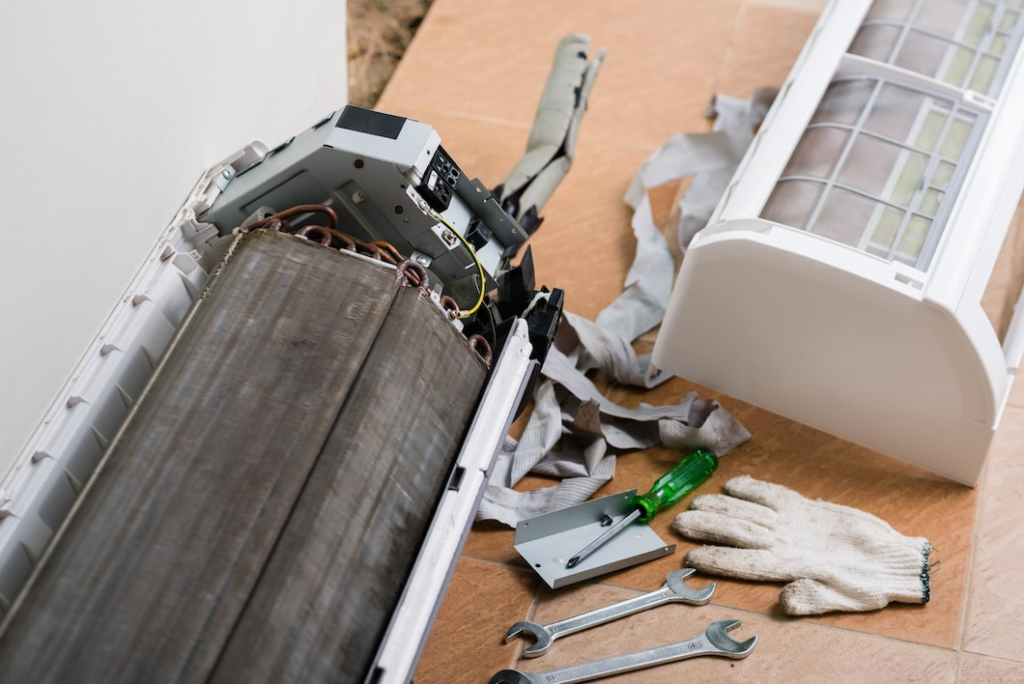
The exact fix depends on the cause. A straightforward drain blockage may be resolved with drain flushing and cleaning. If dirt buildup is heavier inside the unit, a chemical cleaning may be the better option because it clears the coil, tray, blower, and drainage path more thoroughly.
If low refrigerant is involved, the technician should identify the reason before refilling. Simply adding gas without addressing the leak is a short-term fix and usually a waste of money. If the drain tray is cracked or the insulation is damaged, those parts may need replacement.
There is a trade-off here. A very cheap quick fix can stop the dripping for a week or two, but if the root cause is left untouched, the leak often comes back. For customers trying to control costs, the best value usually comes from accurate diagnosis first, then doing the necessary repair once.
How to reduce the chance of another indoor leak
Most indoor water leaks are linked to maintenance that was delayed too long. Regular servicing keeps the filter, coil, blower, and drainage system clean enough to move air and remove condensation properly. For homes, that may mean periodic servicing based on usage. For shops, offices, and rental units running daily, more frequent checks usually make sense.
It also helps to pay attention to early signs instead of waiting for visible dripping. If the aircon starts cooling slower, smells musty, makes bubbling sounds, or leaves damp marks near the unit, act early. Those signs often appear before a major leak.
Businesses especially benefit from preventive maintenance because downtime costs more than the service itself. A leaking unit in a retail space, clinic, office, or server room can disrupt operations fast. Preventive servicing is less dramatic than emergency repair, but usually much cheaper.
Fast action saves more than the air conditioner
When aircon water leaking indoors starts, most people hope it will stop on its own. It usually does not. The water may slow down for a while, then return when the unit runs harder. Meanwhile, the wall, ceiling, flooring, or furniture keeps taking the hit.
If you catch it early, many leaking problems are still simple to fix. If you leave it too long, the repair can spread beyond the air conditioner to painting, plaster, wiring, and cleanup. For homes and business premises alike, quick inspection is the smartest move.
If you need a practical fix without guesswork, AirconServices.my handles same-day troubleshooting, cleaning, and leak repair with straightforward pricing and experienced technicians. A small drip is easy to ignore – until it turns into a bigger repair than it had to be.