A small shop can feel uncomfortably warm within minutes when the aircon is too weak, poorly placed, or overdue for service. Choosing the best aircon for small shop use is not simply about buying the cheapest unit or selecting the same horsepower used at home. Your customer traffic, glass frontage, lighting, stockroom heat, and daily operating hours all affect the capacity you need.
For shop owners, the right choice should cool the sales area consistently, keep electricity costs reasonable, and remain dependable during long business hours. A properly sized inverter split unit is often the most practical answer, but the final choice depends on your shop layout and heat load.
Start With Shop Size, Then Check the Heat Load
Floor area is the first number to check, but it should never be the only one. A 150-square-foot boutique with a shaded entrance may need far less cooling than a 150-square-foot convenience store with refrigerators, bright display lighting, and a glass door opening every few minutes.
As a general starting point, a 1.0 HP unit may suit a lightly used space of around 100 to 150 square feet. A 1.5 HP unit is commonly considered for shops around 150 to 220 square feet, while a 2.0 HP unit may be needed for spaces around 220 to 350 square feet. These are only starting ranges, not a guarantee.
A shop facing direct afternoon sun, located on an upper floor, or fitted with wide glass panels often needs more capacity. So does a salon with hair dryers, a café with kitchen equipment, or a busy retail store where customers constantly enter and leave. Choosing too small a unit can lead to nonstop operation, poor cooling, higher power bills, and early compressor wear.
Going too large is not always smart either. An oversized aircon can cool the room too quickly without running long enough to manage humidity well. It may also cost more upfront. The best result comes from matching the aircon capacity to the real conditions inside your shop.
Best Aircon for Small Shop: Inverter or Non-Inverter?
For most small shops that run air conditioning for several hours each day, an inverter aircon is usually the better long-term choice. Instead of repeatedly switching fully on and off, an inverter compressor adjusts its output to help maintain the set temperature. This can reduce electricity consumption and provide steadier comfort during business hours.
The upfront price is normally higher than a non-inverter model. However, that difference can be worthwhile when the unit operates six, eight, or twelve hours a day. Shops such as mini marts, salons, clinics, tuition centers, and small offices generally benefit most from inverter technology because their cooling demand is regular and prolonged.
A non-inverter model may still make sense for a unit used only occasionally, such as an appointment-only room or a small shop that opens limited hours. The important point is to compare total ownership cost, not just the purchase price. A lower-priced unit that uses more electricity every month can become the more expensive option over time.
Choose the Right Type of Aircon for Your Layout
A wall-mounted split aircon is the most common choice for small retail spaces. It is relatively affordable, quiet, efficient, and easy to maintain when installed correctly. For a simple square or rectangular shop, one properly sized wall-mounted unit may be enough.
Long and narrow premises need more planning. If the aircon is installed only at the front, the back of the shop may stay warm, especially when shelves, partitions, or a storeroom block airflow. In this case, two smaller units can sometimes cool more evenly than one large unit. This setup also provides a backup if one system needs repair.
Ceiling cassette units can be useful for shops with open ceilings and larger sales floors because they distribute air in several directions. They cost more to install and service, so they are not automatically the best option for every small business. Portable air conditioners are generally a temporary solution only. They take up floor space, can be noisy, and rarely perform as well as a correctly installed split system in a busy shop.
Do Not Ignore Installation Quality
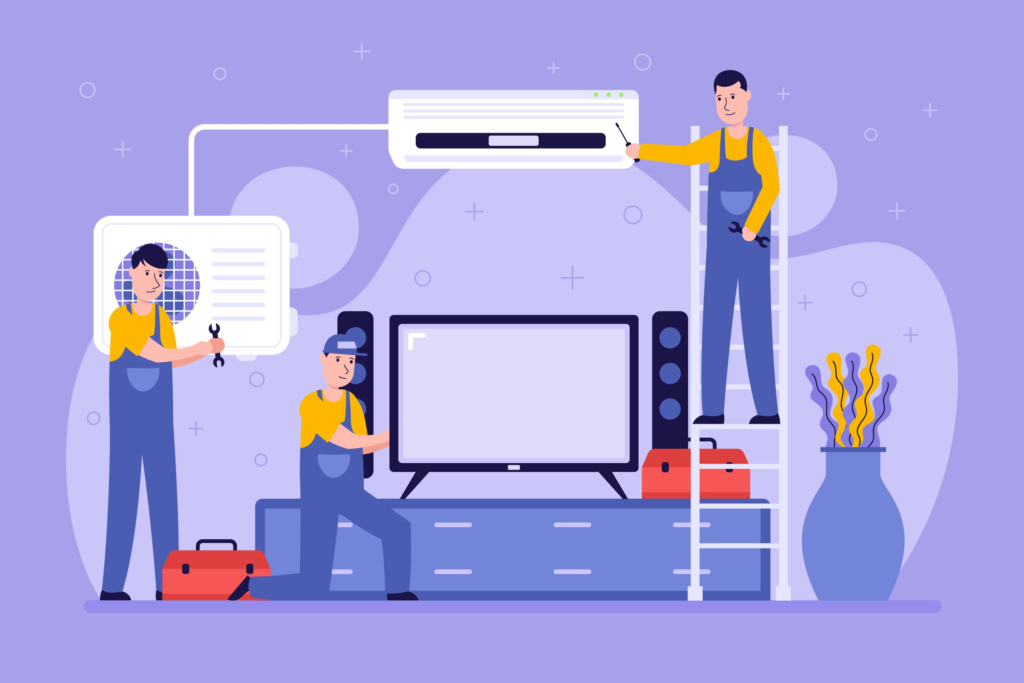
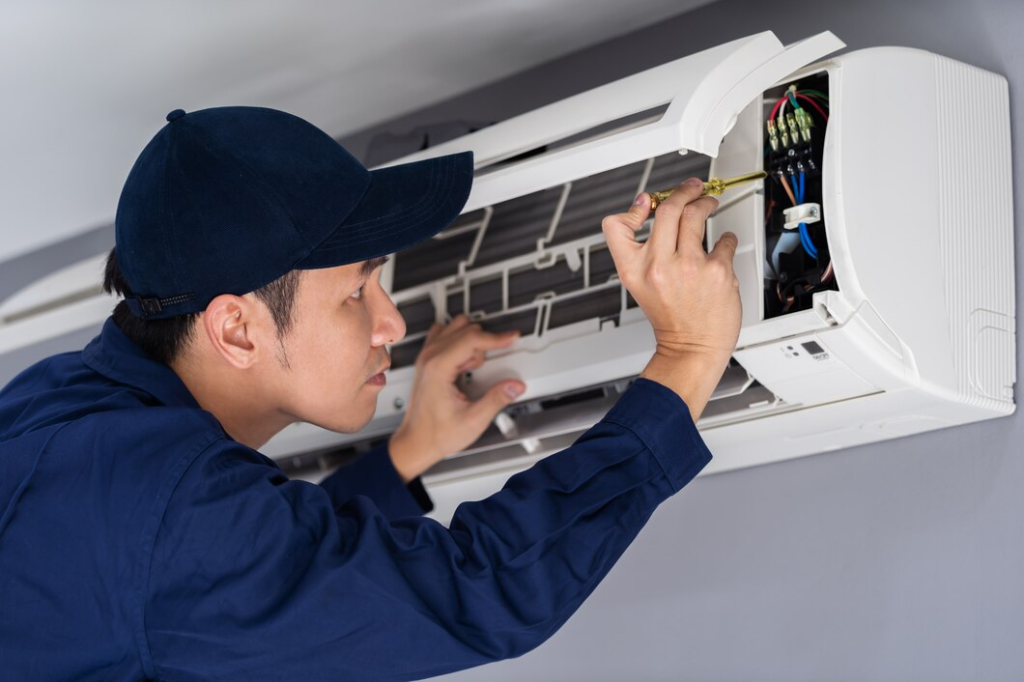
Even a good aircon brand will struggle if the installation is rushed. Incorrect pipe sizing, weak drainage, poor insulation, improper wiring, or an unsuitable outdoor-unit location can cause water leaks, weak cooling, noise, and unnecessary energy use.
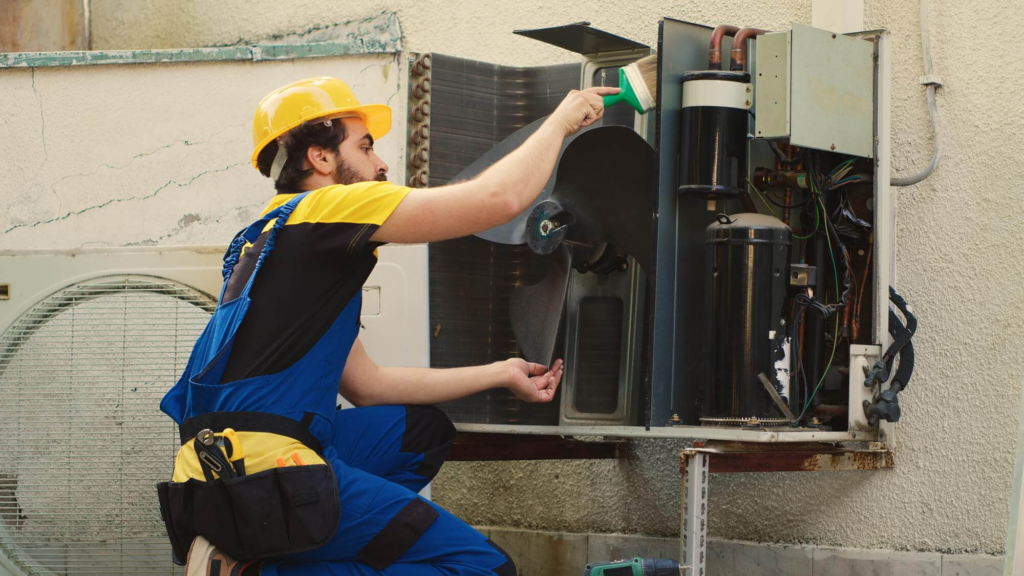
The indoor unit should blow air across the main occupied area without sending cold air directly onto the cashier, waiting seats, or customer queue. It should also be accessible for future servicing. The outdoor unit needs sufficient ventilation to release heat. Putting it in a cramped, hot enclosure can reduce performance and place extra strain on the compressor.
For commercial premises, ask the technician to inspect the electrical load and drainage route before installation. A free site assessment is especially valuable when you are taking over an older shoplot, renovating a unit, or replacing an existing aircon that has never cooled well.
Energy Features That Matter for Shop Owners
Energy efficiency is not just a label on the box. It affects your monthly operating cost. Look for an inverter unit with an appropriate energy-efficiency rating, but do not make a decision based on rating alone. The unit must still be the right capacity for the room.
Useful features include programmable timers, sleep settings for after-hours use, washable filters, and self-cleaning functions. These features can help, but they do not replace regular servicing. A dirty filter, blocked coil, or low refrigerant level can make an efficient aircon consume more power than expected.
If your shop has different operating zones, consider whether separate units are better than one centralized system. For example, a cool stockroom may not need the same temperature as a customer-facing retail area. Zoning lets you avoid cooling empty spaces unnecessarily.
Plan for Maintenance Before Problems Start
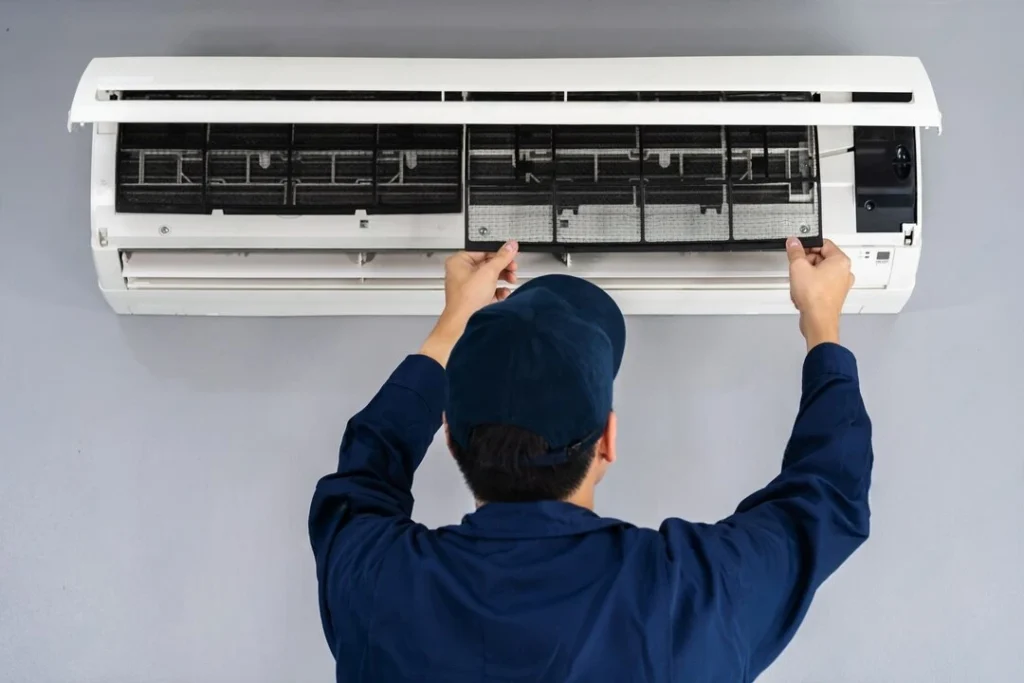
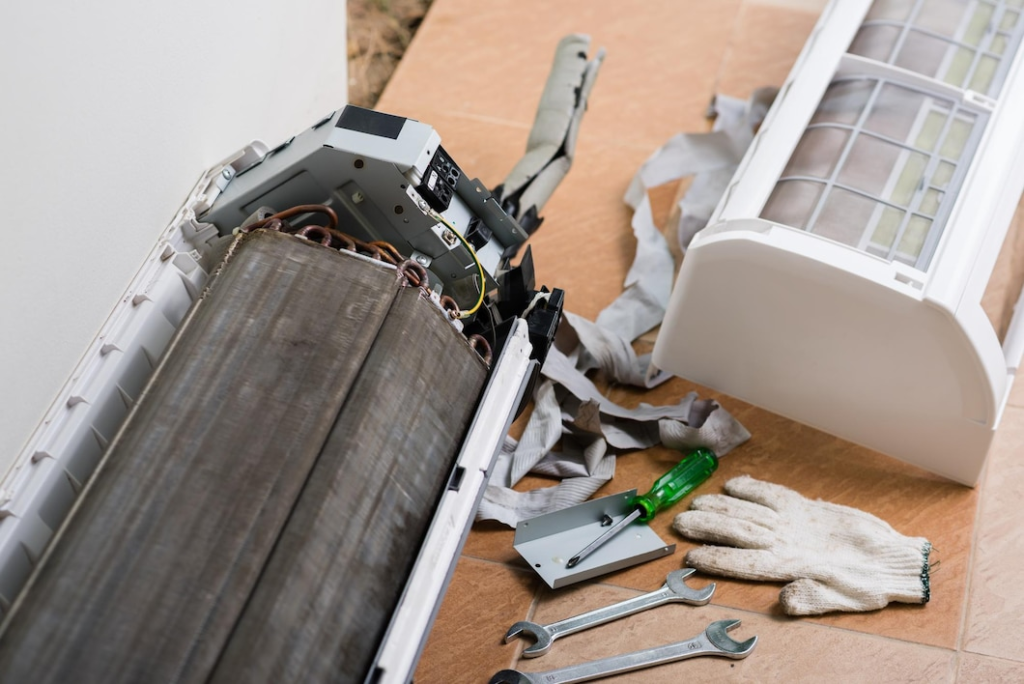
Shop aircons collect dust faster than many home units because doors open frequently and foot traffic is higher. Dusty filters reduce airflow. Dirty evaporator coils can cause unpleasant odors and weak cooling. A blocked drain can lead to water dripping onto displays, counters, or flooring.
For a small shop with daily use, a basic aircon service every three to four months is a sensible starting schedule. Businesses with heavy dust, food preparation, renovation work nearby, or high customer traffic may need more frequent attention. Chemical cleaning is not required at every visit, but it can be necessary when normal servicing no longer restores airflow, cooling, or hygiene.
Do not treat gas refill as routine maintenance. Refrigerant does not simply run out under normal conditions. If the gas level is low, a technician should check for a leak before refilling. Otherwise, the cooling problem will return and you will pay twice.
Common Mistakes When Buying Aircon for a Shop
The first mistake is buying by horsepower alone without checking the shop’s sun exposure, ceiling height, equipment heat, and traffic. The second is installing one unit in a location that cannot reach the back of the premises. The third is delaying service until the unit leaks or stops cooling during peak business hours.
Another costly mistake is selecting an installer based only on the lowest quote. Clear pricing matters, but so do proper materials, correct drainage work, electrical safety, and warranty-backed workmanship. A cheap installation that creates recurring leaks or poor cooling is not a saving.
When to Call for a Site Assessment
A site assessment is worth arranging if your shop feels warm despite having an aircon, you are opening a new outlet, or you are replacing an old system with a different capacity. It is also useful when the unit runs continuously, trips the breaker, leaks water, produces odor, or leaves hot spots in the shop.
For businesses in Selangor, a local technician can assess the space, recommend a suitable capacity, and identify whether the issue is sizing, installation, cleanliness, gas leakage, or an aging unit. AirconServices.my provides practical installation and maintenance support for shop owners who need fast, honest advice before a minor cooling issue disrupts business.
A comfortable shop encourages customers to stay longer and helps staff work better. Choose a unit that fits your real operating conditions, then protect that investment with proper installation and regular service.